Designing a home for the Kerala monsoon.
7 min readBy Homlum Architecture
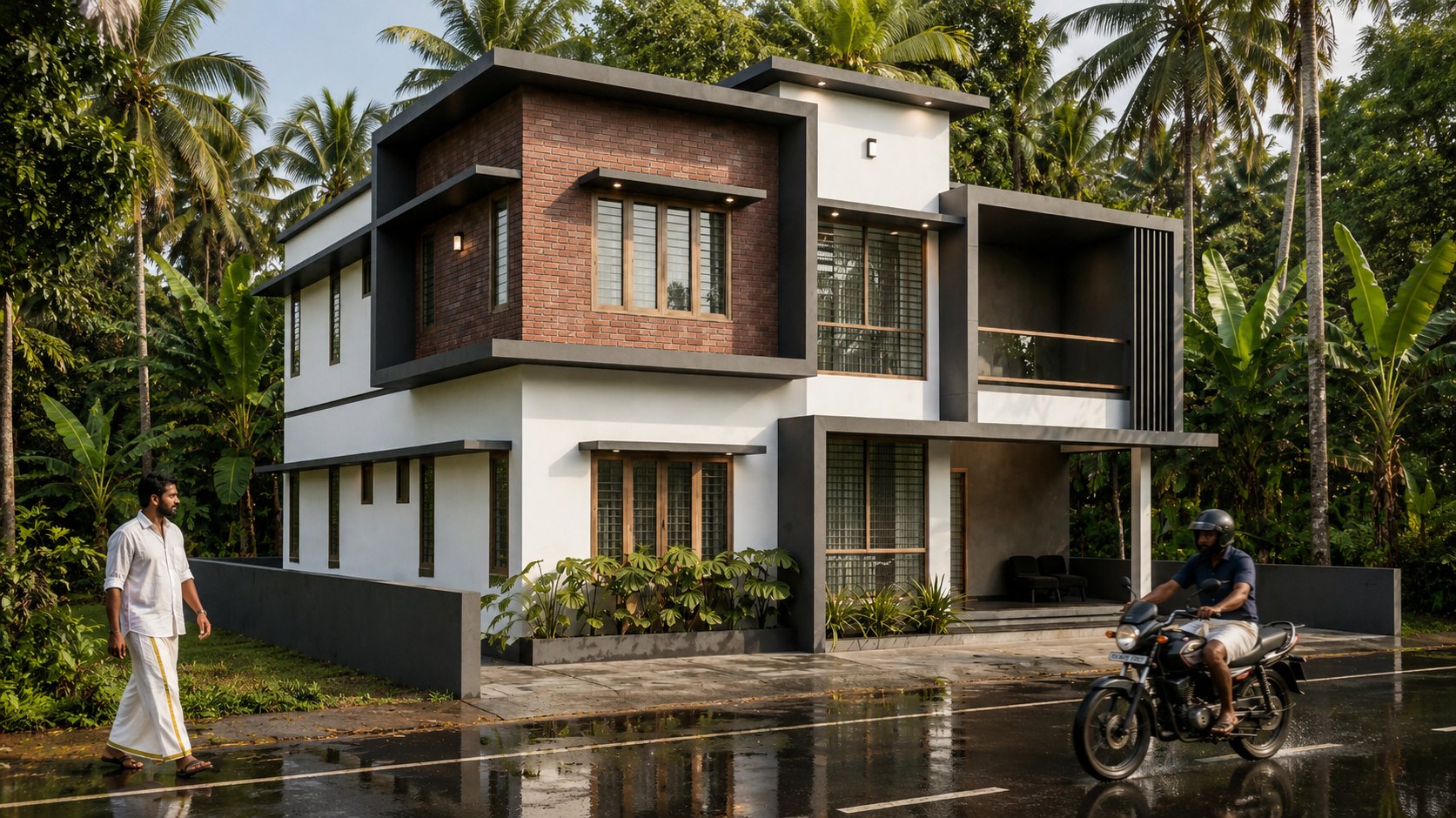
Kerala has two monsoons a year, the southwest monsoon that usually arrives around June and the northeast monsoon later in the year, and both can bring long, heavy spells of rain driven sideways by the wind. A house that is not designed for that shows it within a few seasons: damp walls, stained plaster, leaking terraces and mould in the cupboards. This article covers the design moves that keep a home dry and comfortable through the Kerala monsoon, from the roof down to the drains.
Start with the roof and its overhangs.
The roof is the first line of defence. A pitched roof sheds water quickly, which is one reason it has stayed common across Kerala. A flat concrete roof can work, but it needs a proper slope to its outlets, sound waterproofing and regular cleaning. Many families add a lightweight sloping roof on a steel frame over a flat terrace to protect it. That works well when the frame is properly detailed and the space below is used, for drying clothes or storage, rather than left to collect leaves.
Whatever the roof, the overhang matters. A generous eave keeps rain off the walls and windows and shades them from the sun. Short overhangs look crisp in renders but leave walls exposed to driving rain, especially on the side that takes the brunt of the southwest monsoon.
Watch the places where roofs meet: valleys, junctions with walls, and points where a lower roof meets a higher wall. These are where most leaks begin. Ask for gutters and downpipes sized for heavy rain, with easy access for cleaning, or a deliberate design where water falls freely onto a gravel bed or channel below.
Verandahs, sit-outs and windows that work in the rain.
Traditional Kerala houses were wrapped in verandahs for good reason. A covered sit-out or poomukham at the front, the space where visitors are received, and verandahs along the sides keep rain off the main walls. They let you leave doors and windows open during a downpour and give the family somewhere to sit and watch the rain. Even a narrow covered edge along the most exposed side makes a difference.
Windows need thought:
- Put sunshades or projections over windows, deep enough to stop rain falling straight onto the frame.
- Keep the main windows of bedrooms and living rooms off the most exposed face where you can, or protect them with a verandah.
- Add high-level ventilators or louvres so rooms can breathe when the windows are shut against the rain.
- Cut a drip groove under every sill, sunshade and slab edge, so water drops off instead of running back along the underside and down the wall.
- Choose frames and hardware that resist rust and swelling.
Air movement matters as much as keeping water out. Humid air trapped in a closed house leads to mould and musty rooms. The guide on natural ventilation in a tropical home explains how to plan for cross-ventilation.
Plinth height and protection at ground level.
The plinth is the raised base of the house, the step up from the ground outside to the ground floor. A higher plinth keeps floors dry in heavy rain, protects the walls from splash and gives you a margin if water rises. The right height depends on the site. Ask neighbours and the local body about the highest water level the area has seen, look at the land around you, and let your architect and engineer set the level from that. Low-lying plots near rivers, paddy fields and the backwaters need particular care.
Plan steps, ramps and the car porch with the plinth in mind, so the house stays easy to enter for elders and anyone with limited mobility. A band of paving or stone around the base of the walls, sloping outwards, stops splash and erosion.
In a Kerala monsoon, every bit of water that reaches the house needs a planned path away from it.
Drainage around the house and across the site.
Rain that leaves the roof has to go somewhere. Plan the whole route:
- Roof water collected in gutters or dropped into a defined channel.
- Downpipes that discharge into drains, not onto the plinth or the base of a wall.
- Ground around the house sloped away from the walls.
- Surface drains that carry water to a soak pit, recharge well, storage tank or permitted outlet.
- Paving that lets water soak in where possible, instead of sealing the whole yard.
Rainwater harvesting is also part of the building rules for many houses. The rules are amended from time to time, so confirm what applies to your plot with your local body or your architect.
On sloping plots, especially in the hills of Wayanad and Idukki, drainage is tied to slope stability. Water running uncontrolled through cut slopes and behind retaining walls can do serious damage. Have a structural or geotechnical engineer look at the site before you design retaining walls or cut into a hillside.
Waterproofing details that save years of repairs.
Most monsoon damage starts at small, predictable points. Give them attention at the drawing stage rather than after the first leak:
- terraces and balconies, with a proper slope, waterproofing turned up the walls and outlets that do not block
- bathrooms, especially sunken floors, which need careful waterproofing before tiling
- parapet tops and wall copings, which should slope and throw water clear of the wall
- junctions between concrete and masonry, where fine cracks often open
- external walls, which need good plaster and an exterior paint suited to heavy rain
- the base of walls, where a damp-proof course stops moisture rising from the ground
Material choice matters too. Some materials take the rain well and age gracefully, while others stain quickly. The guide to materials that age well in a humid climate looks at where each belongs.
Common questions.
How do I protect my house from heavy rain in Kerala?
Start with deep roof overhangs, covered verandahs on the exposed sides and sunshades over windows. Raise the plinth above the highest water the site is likely to see, and slope the ground away from the walls. Then get the waterproofing right on terraces, bathrooms and wall junctions.
Is a sloping roof better than a flat roof in Kerala?
A sloping roof sheds rain faster and its eaves protect the walls, which suits the climate well. A flat roof gives usable terrace space but needs careful slopes, waterproofing and maintenance. The comparison of sloping and flat roofs sets out the trade-offs in more detail.
What causes dampness in walls during the monsoon?
Usually water getting in where it should not: rain driven onto unprotected walls, leaks at roof and terrace junctions, moisture rising from the ground, or a plumbing leak inside the wall. Poor ventilation makes it worse by trapping humid air. Finding the source comes first, and a persistent problem is worth having inspected by a professional.
Can construction continue during the monsoon?
It can, with planning and protection, though earthwork, foundations and roofing are harder in heavy rain. Many projects aim to have the roof on before the wettest months so that work can move indoors. Talk to your architect and contractor about sequencing the work around the season.
If you are planning a home that has to stand up to the monsoon, talk to us about your site and what it needs.